

Newsletter
Don't miss out on new remote work opportunities. Subscribe to our weekly newsletter.
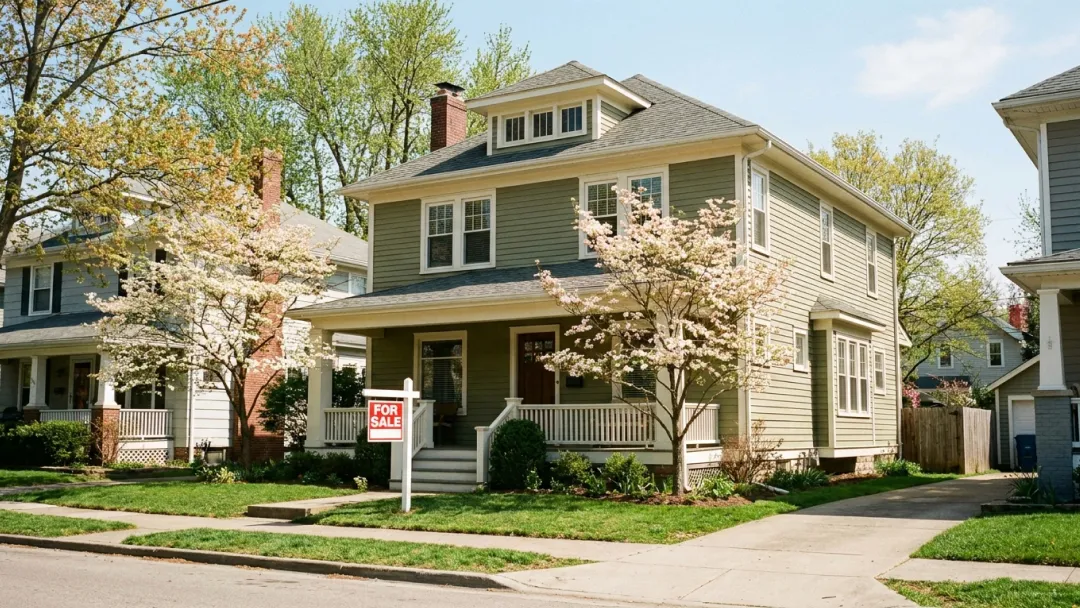
Remote work has weakened the link between jobs and housing location, easing urban housing costs and boosting demand in smaller, affordable markets. For workers and renters this creates both opportunities and challenges.
For much of the last two decades, living near a major job hub has come with a hefty price tag. Cities like San Francisco, New York, and Seattle have seen housing costs skyrocket far beyond wage growth, leaving many workers struggling to keep up - or completely priced out of these areas.
"In much of the United States, the typical home has simply outrun the typical paycheck." - Manu Garcia and Carlos Garriga, St. Louis Fed
Between 2000 and 2024, median home prices in the U.S. increased by about 207% in nominal terms, while median per-capita income rose just 155%. This widening gap underscores the affordability crisis.
In San Francisco, the median home price is $1.4 million, which means a household would need an annual income of $321,463 just to qualify for a mortgage. San Jose is even pricier, requiring $458,504 in yearly income to afford the median home. Other cities, like Seattle, Denver, and Miami, demand annual incomes between $140,000 and $190,000 to purchase a typical home.
Renters face similar struggles. Nationwide, the hourly wage needed to afford a modest two-bedroom rental is $33.63, yet the average renter earns only $23.60 per hour. Single workers are hit the hardest - 64% of unmarried individuals in expensive metros report difficulty covering housing costs, compared to 39% of married households.
Generationally, the impact is clear. By age 30, only 35% of Millennials owned homes, a stark contrast to the 48% of Boomers who were homeowners at the same age.
The mechanics of this are pretty straightforward. When high-paying jobs are clustered in central business districts, workers need to live close enough to commute. This concentrated demand drives up land values, and housing prices follow suit.
"WFH tends to flatten intracity house-price gradients, weakening the price premium associated with good job access." - Jan K. Brueckner, Matthew E. Kahn, and Gary C. Lin, American Economic Journal
The problem is compounded by a lack of housing supply. Cities have struggled to build enough homes due to restrictive zoning laws, sluggish permitting processes, and high construction costs. This has created a situation where demand consistently outpaces supply, driving prices higher. High-income households, benefiting from rising wages, outbid others for the limited housing stock, leaving average earners priced out.
"Housing supply has become much more inelastic over time... new supply does not increase much in general, including when home prices increase a lot." - Joe Gyourko, Nonresident Senior Fellow, Brookings
The results have been dramatic. From 2020 to 2025, New York City lost over 300,000 residents, Los Angeles saw a net outflow of 200,000, and San Francisco shed 175,000. Even high earners aren’t immune - among Californians earning $150,000 or more, those citing "cheaper housing" as their reason for leaving nearly tripled, jumping from 7% to 20%.
The exodus from urban centers highlights just how untenable housing costs have become, paving the way for remote work to redefine where people choose to live - a shift explored further in the next section.
The shift away from pricey urban centers has a clear driver: remote work has given millions of Americans the freedom to choose where they live. This flexibility has triggered noticeable migration patterns, particularly toward suburban and rural areas.
Before the pandemic, your job often dictated your address - and the cost of living that came with it. Now, with 25% to 28% of full-time U.S. employees working remotely at least three days a week, many workers can prioritize personal preferences over proximity to the office. For instance, a software engineer earning $180,000 in San Francisco, where a median-priced home costs $7,400 per month, could save over $66,000 annually by moving to Boise. That kind of savings is hard to ignore.
Hybrid workers, who commute less frequently, are also rethinking how far they’re willing to travel. Many now accept commutes of 45 to 75 minutes, effectively expanding the commuting radius by 50% to 100%. This shift is reshaping housing demand well beyond city boundaries, driving migration trends that are altering the housing landscape.
This newfound flexibility has led to one of the most significant domestic migration shifts in recent memory. Between 2020 and 2021, searches for suburban and rural homes surged by 200% to 300%, while searches for urban apartments dropped by 15% to 25%. What began as a "Great Scramble" during the early pandemic years (2020–2022) has since evolved into a recalibration period (2022–2024), with housing trends stabilizing by 2026.
These migration patterns have eased pressure on urban housing markets, slowing price growth and even causing declines in some high-cost cities. For example, Phoenix gained 200,000 new residents between 2020 and 2025, while Tampa and Austin added 150,000 and 120,000, respectively. By Q4 2025, 18.8% of house hunters were looking to relocate to a different metro area, up from 15.9% five years earlier.
Mid-sized cities - those with populations between 150,000 and 500,000 - have emerged as big winners. Cities like Raleigh-Durham, Boise, and Chattanooga offer an appealing mix of affordability and urban amenities that larger cities or rural towns often lack. In 2025, more than 60% of rental searches in Savannah, Durham, and Charleston came from out-of-market renters.
"People are moving to Tennessee in droves - especially Nashville and its surrounding areas. Compared to the West Coast, where many of them are moving from, we have relatively low housing costs and lower taxes. A lot of the people moving here work remotely." - Aaron Glicken, Redfin Premier Agent
Remote work is reshaping housing markets, especially in pricey urban centers. With fewer people needing to live near downtown offices, demand for city living has dropped.
Take Washington, D.C., for example. Asking rents in the city fell 10.7% between 2019 and 2025, which, when adjusted for inflation, amounts to a 14.7% drop. Condo prices in the area also plummeted, hitting -25.2% compared to 2019 levels by early 2026. This trend has been dubbed the "Rent Donut" effect, where prices decrease in city centers while suburban areas remain stable or even grow.
Research backs up the idea that remote work is driving down housing costs in high-productivity areas, as employees move to more affordable metros without losing their jobs. For instance, San Francisco saw home prices drop 10% from their pandemic-era peak. Similarly, Los Angeles County experienced a population decline of over 300,000 residents since 2020, softening housing demand in the region.
While urban centers are softening, cities that boomed during the pandemic are now seeing price corrections. Places like Austin, Boise, and Phoenix became hotspots for remote workers between 2020 and 2022, but prices in these areas surged beyond what local incomes could sustain.
In Austin, median home prices jumped from $340,000 in 2020 to $560,000 in 2022, only to fall 15% by late 2023]. Boise followed a similar trajectory, with prices climbing 67% by mid-2022 before dropping about 12% through 2023. Austin's aggressive homebuilding during the remote-work boom led to an oversupply, which sped up price declines as migration slowed.
"The result was a glut of new apartments in markets that had been built to absorb more migration than actually materialized. That's the core reason Sun Belt rents have fallen so sharply from peak." - Henry Jo, Housing Analyst
By March 2026, U.S. home prices increased just 1.7% year-over-year, marking the slowest growth on record. Some cities even saw outright declines, such as San Antonio (-4.1%), Jacksonville (-3.5%), and Austin (-3.0%). Month-over-month, cities like Fort Worth (-0.8%), Austin (-0.7%), Nashville (-0.6%), and Oakland (-0.6%) also recorded price drops].
"Price growth is losing steam, with the slowest annual gains we've seen in a decade... High mortgage rates and global uncertainty are causing some would-be buyers to back off, which is putting a lid on home prices." - Chen Zhao, Head of Economics Research, Redfin
Housing trends vary widely depending on the type of area - urban core, suburb, exurb, or former "Zoom town." The table below highlights how demand and pricing pressures differ across these regions.
Dense Urban Cores
Housing Demand Trend: Softening / Declining
Price Pressure: Downward
Key Examples: San Francisco, Washington D.C., Manhattan
Established Suburbs
Housing Demand Trend: Stable to High
Price Pressure: Upward (tight supply)
Key Examples: Arlington, VA; Alexandria, VA
Former "Zoom Towns"
Housing Demand Trend: Correcting / Oversupplied
Price Pressure: Declining from peaks
Key Examples: Austin, TX; Boise, ID; Phoenix, AZ
Hybrid Corridors
Housing Demand Trend: Increasing
Price Pressure: Upward
Key Examples: Hudson Valley, NY; Lehigh Valley, PA
Exurbs / Outlying Areas
Housing Demand Trend: Elevated / Rising
Price Pressure: Upward
Key Examples: Frederick, MD; Stafford, VA; Denton, TX
Data compiled in June 2026.
The importance of proximity to the office has diminished. This means the cost difference between living downtown and living 30 or 40 miles away has shrunk, giving buyers and renters more flexibility than they had just a few years ago. These shifts highlight how remote work is reshaping housing demand, creating new opportunities for people across different regions.
The shifting housing landscape is opening up new possibilities for homebuyers and renters.
Urban markets are softening, creating openings for buyers, especially as remote work continues to influence housing trends. By February 2026, 28 of the 53 largest U.S. metro areas saw year-over-year price drops, with the largest declines in Florida, California, and Texas. Cities such as Miami, Nashville, and Austin now have sellers outnumbering buyers by 163%, 120%, and 112%, respectively, giving buyers a stronger hand in negotiations.
For remote workers, this trend enables what’s known as geographic arbitrage. By leveraging higher urban salaries, buyers can secure more affordable homes in less expensive markets. For example, purchasing a $298,000 home in Knoxville, TN, with an $80,000 down payment results in a 73% loan-to-value ratio, eliminating the need for private mortgage insurance (PMI) and qualifying for better interest rates. In contrast, using the same $80,000 for a down payment in San Francisco, where median home prices hover around $1.4 million, would trigger PMI and higher rates. Additionally, maintaining a debt-to-income ratio below 36% can lower quoted mortgage rates by 0.25%–0.75%.
"Remote workers aren't just chasing cheap housing - they're making a calculated financial move. A $300,000 purchase in a growing Sun Belt market with a 20% down payment gives them a loan profile that qualifies for rates that coastal buyers earning the same salary simply cannot access." - Lisa Sturtevant, Chief Economist, Bright MLS
While buyers are leveraging these shifts, renters are also finding ways to benefit.
For renters, remote work has unlocked new possibilities by allowing them to maintain urban salaries while cutting living costs. Moving from expensive metro areas to nearby "spoke" cities - like choosing San Antonio over Austin or Colorado Springs instead of Denver - can significantly reduce monthly rent while keeping larger cities within reach.
The Sun Belt region has seen a correction, with cities like Austin and Phoenix experiencing an oversupply of apartments. This surplus has pushed rents down from their peak levels, giving renters more choices and better leverage to negotiate lease terms. However, before signing a lease in smaller towns or exurban areas, make sure high-speed fiber internet is available, as connectivity can be inconsistent in some regions.
As remote work continues to shape housing preferences, staying flexible and strategic will be essential for navigating future market shifts.
Remote work has reshaped where Americans can afford to live. By January 2025, nearly 29.4% of all U.S. paid workdays were fully remote - a sharp rise from just 7.2% before the pandemic. This shift has loosened the dominance of expensive urban hubs over workers' housing decisions.
This trend isn’t just about housing affordability; it’s also about expanding economic possibilities. For the 37% of U.S. jobs that can be performed entirely remotely, housing decisions now center on factors like budget, space, community, and overall quality of life, rather than commute times. Remote work is redefining how and where people live, creating both challenges and opportunities for a more balanced housing market.
Remote work is still playing a big role in reshaping housing markets, particularly in regions like the South and Mountain West. During the migration surge of 2020–2022, these areas saw rapid price hikes. But now, as demand cools and housing inventory expands, many of these markets are experiencing price corrections.
For context, national median list prices have been on a steady decline for seven months straight as of May 2026. However, experts don’t see this as a market crash. Instead, they describe it as a gradual adjustment tied to factors like buyer affordability and local wage trends.
To ensure you select a market that supports both safety and long-term living, start by confirming your income portability with your employer. Get this in writing before making any big moves. Use resources like the MIT Living Wage Calculator to get a realistic picture of expenses, including housing, transportation, food, and healthcare.
Focus on locations with diverse economies and consistent new construction, as these are signs of stability and growth. Before committing, spend time in potential areas. Visit coworking spaces, cafes, and libraries to get a feel for the community and ensure reliable high-speed internet is available - an absolute must for remote work.
Instead of guessing or waiting for the news to cover a housing shift, you can track market shifts in real-time using free, publicly available data tools. Three of the best resources that update constantly are:
Pro Tip: Type the name of the city you are interested in plus the words "housing market report" into Google. Major real estate sites update these pages every month with simple, easy-to-read charts that explicitly tell you if prices are trending "Up" or "Down" compared to last year.
If you’re ready to align your career with your housing goals, Remote Work USA can help. Our curated job board features remote and hybrid opportunities in fields like engineering, marketing, data, and business - giving you the tools to find a role that supports geographic flexibility. Sometimes, finding the right remote job is the first step toward living somewhere more affordable.
Don't miss out on new remote work opportunities. Subscribe to our weekly newsletter.